
Mercury-Free, Tooth-Colored Fillings in Celebration, FL
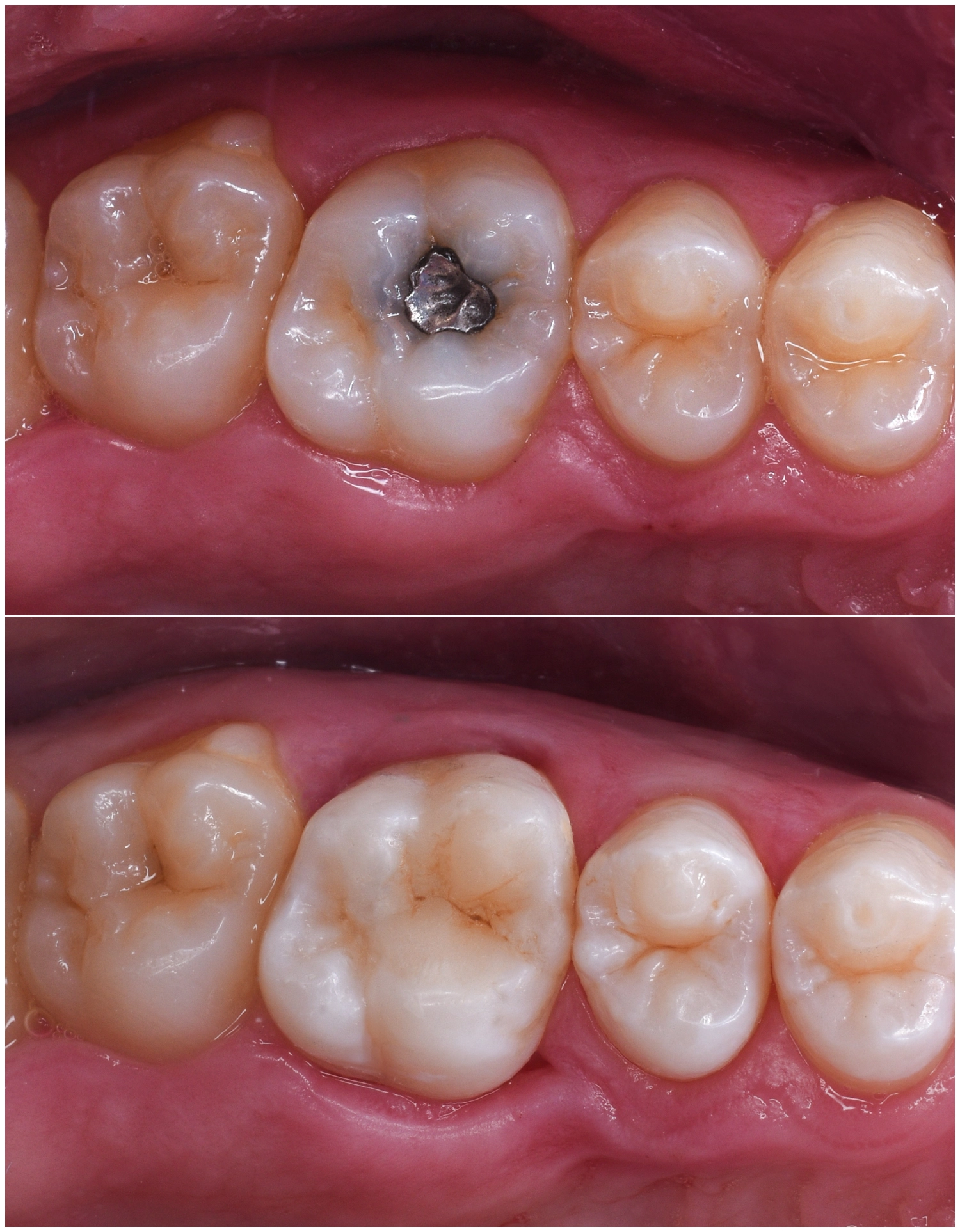
If you've got a mouthful of dark silver fillings from years ago, you're not alone in wondering whether it's time to replace them. At Lumos Dental Studio, Dr. Radha Patel offers tooth-colored composite fillings, both for new cavities and for patients who want to replace old amalgam fillings with something that blends in rather than stands out.
What Are Amalgam Fillings, and Why Do Patients Replace Them?
Amalgam, often called silver or metal fillings, has been used in dentistry for well over a century. It's a mix of metals, including mercury, silver, tin, and copper, and it's known for being durable under the pressure of chewing.
Patients choose to have amalgam fillings replaced for a few different reasons.
Appearance. Silver fillings darken over time and show clearly when you smile, laugh, or talk, especially if they're in the front of your mouth or visible when you open wide.
Age and wear. Older amalgam fillings can crack, leak, or wear down at the edges, allowing bacteria to get underneath and cause new decay beneath the filling itself.
Tooth stress. Amalgam expands and contracts with temperature more than tooth structure does, which over many years can contribute to small cracks forming around the edges of the filling.
Personal preference. Some patients simply prefer to move away from metal-based materials in their mouth and want a modern, tooth-colored alternative instead.
Whatever the reason, replacing an amalgam filling is a routine procedure, not something that requires special preparation beyond a normal appointment.
Composite vs. Amalgam: What's the Real Difference?
What the Removal Process Looks Like
Replacing an amalgam filling with a composite one is a straightforward, in-office procedure.
Most patients are in and out in a single appointment, and there's no need for a follow-up visit unless multiple fillings are being replaced.

Exam
Dr. Patel examines the existing filling and the surrounding tooth structure to confirm replacement is the right call and check for any decay underneath.
Numbing
The area is numbed just as it would be for a new filling.
Careful removal
The old amalgam filling is removed, with attention paid to minimizing disruption to the surrounding tooth and reducing debris during the process.
Cleaning and inspection
Once the old material is out, the tooth is checked for any decay or damage that needs to be addressed before the new filling goes in.
Placement of the composite filling
The tooth-colored material is applied in layers, shaped to match your natural tooth, and hardened with a curing light.
Bite check
Dr. Patel checks your bite to make sure everything feels comfortable before you leave.
Benefits of Tooth-Colored Fillings
Composite fillings are shade-matched to your teeth, so they're difficult to spot even up close.
Because composite bonds directly to the tooth, the preparation is generally more conservative than what amalgam requires.
For fillings in visible areas, especially front teeth, composite avoids the dark edges and shadowing that amalgam can create over time.
For patients who prefer to avoid mercury-containing materials going forward, composite offers a modern alternative for both new fillings and replacements.
Composite handles normal chewing and daily wear well, making it a solid choice for most cavities, front or back.
Frequently Asked Questions
Is it safe to remove old amalgam fillings?

Do I need to replace all my silver fillings at once?
Will my insurance cover replacing an amalgam filling with a composite one?
How long do composite fillings last?
Does replacing a filling hurt?
Schedule A Tooth-Colored Filling Consultation Today
Thinking about replacing an old silver filling, or need a new one that blends in with your smile? Schedule a consultation with Dr. Radha Patel at Lumos Dental Studio in Celebration, FL.
Schedule an appointment