
Dental Crowns
A cracked tooth doesn't always mean losing it. A crown covers the damaged part of a tooth and lets you keep chewing, talking, and smiling without thinking about it again. At Lumos Dental Studio, Dr. Radha Patel places crowns for patients dealing with everything from a chip that happened mid-bite to a tooth that needs protection after a root canal.
A crown is a custom-made cap that fits over your natural tooth, restoring its shape, strength, and appearance. Unlike a filling, which repairs a small area, a crown covers the entire visible portion of the tooth above the gumline. That makes it the right choice when there isn't enough healthy tooth structure left to support anything smaller.
When Do You Actually Need a Crown?
Not every damaged tooth needs one. Here's when a crown typically becomes the right call.
A cracked or fractured tooth
Teeth crack from grinding, chewing on something hard, or a fall. Some cracks are small enough to watch. Others run deep enough that the tooth flexes when you bite down, which is usually a sign it needs to be covered before the crack spreads further into the root.
Decay too large for a filling
When a cavity takes up more of the tooth than it leaves behind, a filling doesn't have enough tooth left to bond to securely. A crown replaces the missing structure instead of just patching a hole.
After a root canal
Root canal treatment removes the infected tissue inside a tooth, but it also leaves the tooth more brittle than before. A crown protects it from fracturing under normal biting pressure, which is why most back teeth get one after treatment.
Replacing a large or failing filling
Old fillings, especially large ones, can weaken over time or crack the tooth around them. When a filling has failed more than once, a crown is often more durable than trying to repair it again.
Supporting a dental implant or bridge
Crowns also serve as the visible, functional part of an implant or as the anchor points for a bridge.
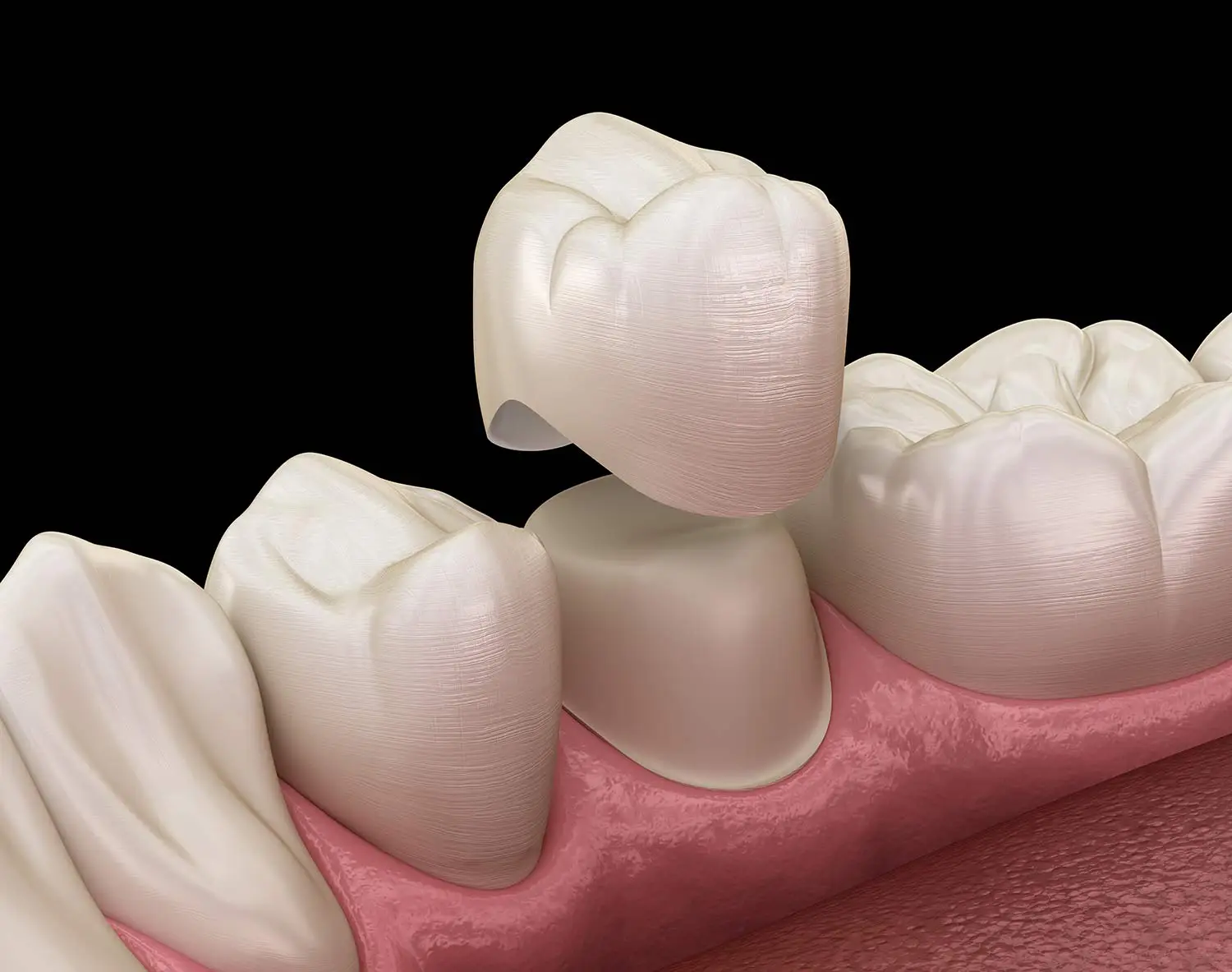
Crown Materials
Crowns can be made from a few different materials, and the right one depends on where the tooth sits in your mouth and what it needs to hold up to.
Dr. Patel will walk you through which material makes sense for your tooth during your visit, based on where it is, how it functions, and what it needs to withstand.
The most common choice for front teeth and any tooth that's visible when you smile, since they can be shaded to match your natural teeth closely.
Known for their strength, which makes them a common choice for molars and other teeth that take on heavier chewing forces.
Combine a metal base with a porcelain layer on top, giving added strength in situations where that's the priority.
What the Process Looks Like
Getting a crown typically takes place over one or two appointments, depending on the option that fits your case.
Most patients are back to normal eating within a day, though it's worth being a little careful with sticky or very hard foods for the first day or two.

Exam and preparation
Dr. Patel examines the tooth, takes any needed X-rays, and removes the damaged or decayed portion. The tooth is then reshaped to make room for the crown.
Impression or digital scan
An impression or digital scan of the prepared tooth is taken so the crown can be custom-made to fit precisely.
Temporary crown (if applicable)
If your crown is being made outside the office, a temporary crown protects the tooth while you wait.
Placement
Once the permanent crown is ready, it's checked for fit and bite, adjusted as needed, and cemented into place.

Same-Day Crowns: What to Ask About
Same-day crown technology (often called CEREC) lets some dental offices design and mill a crown in a single visit instead of sending an impression out to a lab. Whether that's the right option for your tooth depends on the location, size, and complexity of the restoration, and not every case is a good candidate for it. If a same-day appointment is a priority for you, mention it when you call so our team can let you know what's possible for your specific situation and schedule accordingly.
Frequently Asked Questions
How long do dental crowns last?

Does getting a crown hurt?
Will my crown match the color of my other teeth?
How much does a dental crown cost?
Can a crown be placed on a tooth that's already had a filling?
What happens if I wait to get a crown?
Protect Your Smile With a Custom Dental Crown
Ready to find out if a crown is the right fit for your tooth? Schedule a consultation with Dr. Radha Patel at Lumos Dental Studio in Celebration, FL, and get a clear plan for treatment.
Schedule an appointment